Decoding the Genetic and Epigenetic Regulation of Chromatin Organization
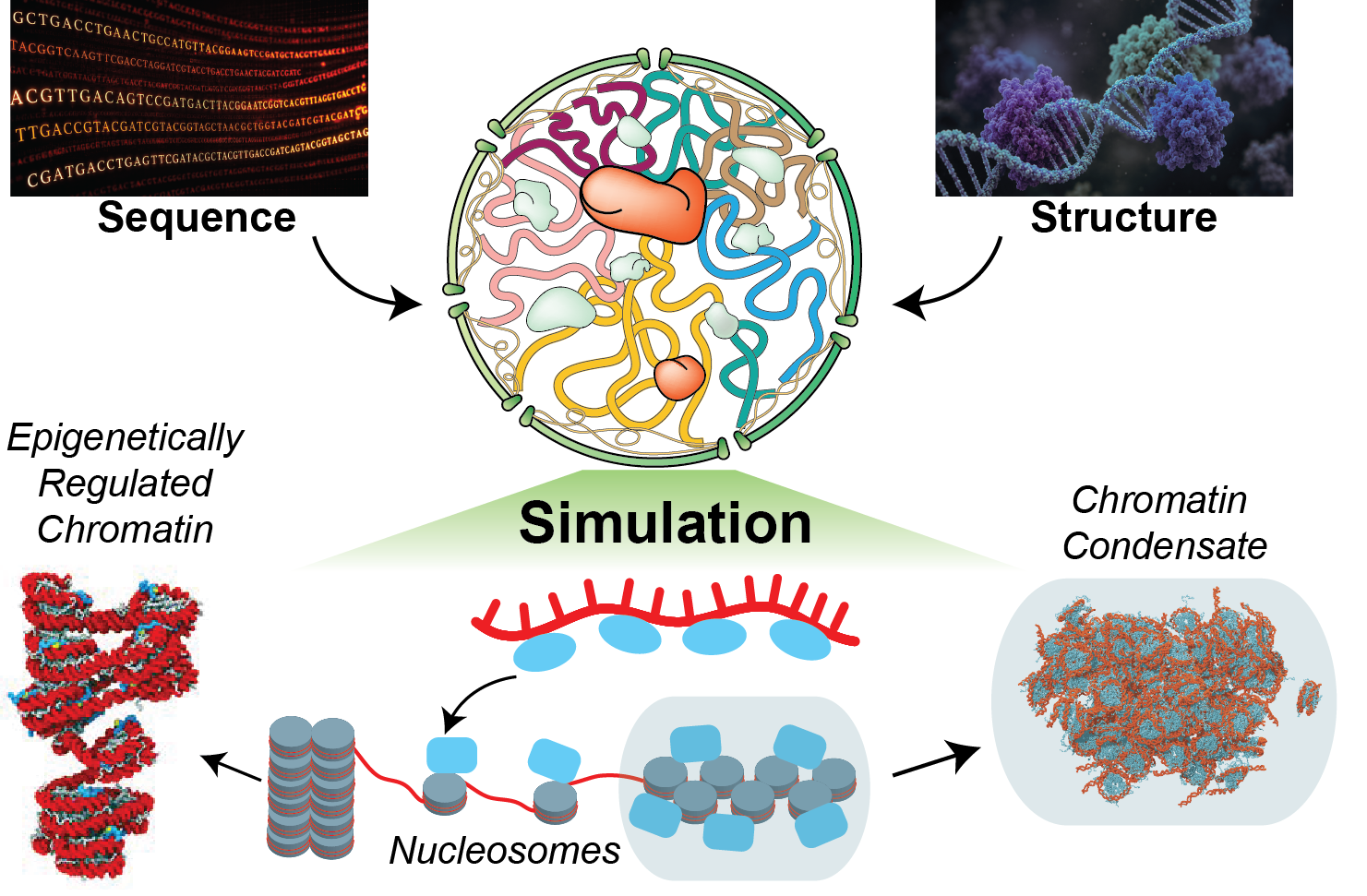
The genome is often described as the blueprint of life, yet the mechanisms by which this blueprint gives rise to distinct cell identities remain incompletely understood. The genome and epigenome jointly orchestrate this process through the precise regulation of gene expression. Variations in DNA sequence and epigenetic modifications shape cell identity during development, while their dysregulation is associated with numerous human diseases.
Our group develops advanced computational models to characterize genetic and epigenetic variation. We investigate how changes in DNA sequence, epigenetic modifications, and regulatory proteins reshape chromatin structure and influence gene regulation. By integrating physics-based simulations, artificial intelligence, and data-driven methods, we aim to identify the molecular signatures that govern genome and epigenome variation and determine their effects on gene expression.
Using these models, we study how epigenetic regulation drives chromatin phase separation, genome compartmentalization, and biomolecular condensate formation in the crowded nuclear environment. By linking epigenetic profiles, regulatory proteins, chromatin structure, and phase behavior, we seek to decipher the “epigenetic grammar” that connects molecular interactions to genome organization and function.
This NSF-supported research aims to establish predictive and mechanistic links among genetic and epigenetic variation, three-dimensional chromatin organization, and gene regulation. Ultimately, we seek to improve our understanding of epigenetic dysregulation in disease and support the rational development of therapeutic strategies targeting abnormal chromatin organization.
Physics-Informed AI for Protein–Nucleic Acid Recognition and Design
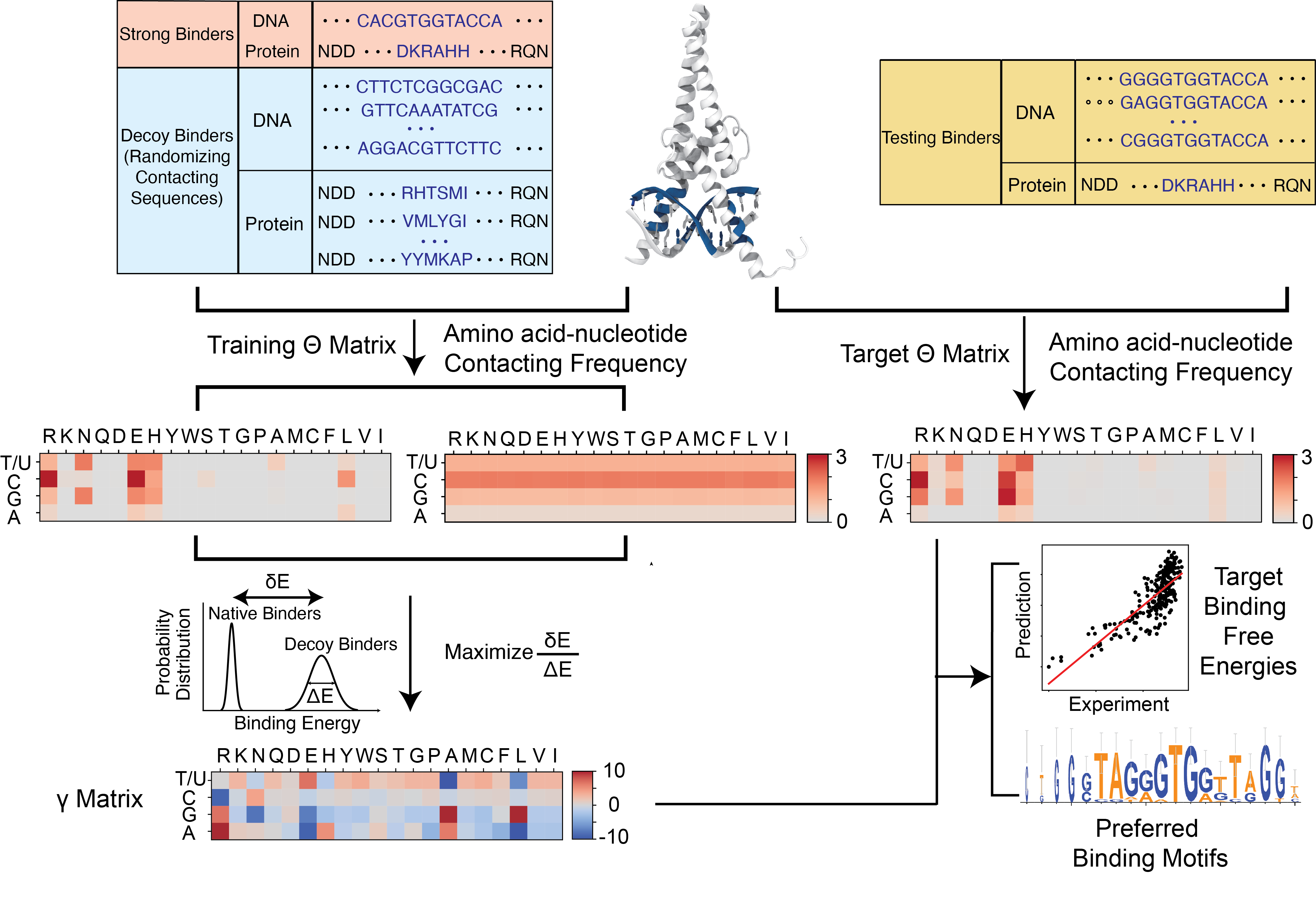
Protein–nucleic acid interactions regulate many essential biological processes. Accurately predicting these interactions can deepen our understanding of molecular recognition and accelerate the development of diagnostic and therapeutic technologies. Our group develops data-efficient, physics-informed AI methods that integrate biomolecular sequence, structure, and dynamics to predict protein–nucleic acid interactions, even when experimental affinity data are limited.
Our current research centers on three interconnected goals: developing transferable predictive models, designing high-affinity oligonucleotide aptamers for selected protein targets, and building a publicly accessible platform for rapid binding-affinity prediction and nucleic acid motif discovery. By integrating molecular simulation, artificial intelligence, and experimental validation, we aim to establish a generalizable framework for understanding protein–nucleic acid recognition and advancing therapeutic oligonucleotide discovery.
This NSF-supported project is conducted in close collaboration with experimental laboratories specializing in DNA mismatch recognition and oligonucleotide aptamer selection. Model predictions are evaluated using public datasets and newly generated biochemical and biophysical measurements.
Structure-function Relationship of Noncoding RNAs
Noncoding RNAs (ncRNAs) play a critical role in epigenetic regulation, occupying approximately 70% of the human genome. Recent experimental and computational progress has revolutionized our understanding of these genome “dark matters”. Many ncRNAs, especially long noncoding RNAs (lncRNAs), regulate gene expressions by forming chromatin loops to enhance gene expression, bringing functional proteins into spatial proximity, and recruiting epigenetic enzymes to modulate chromatin structures. Understanding the structure-function relationship of ncRNAs necessitates accurate characterization of protein-RNA interactions.
We will develop innovative models to study the structure and function of ncRNA, as well as their interactions with proteins. Particularly, we will employ simulation to investigate the molecular mechanisms underlying the recruitment of epigenetic enzymes by ncRNAs to regulate gene expressions. Through these efforts, we aim to illustrate the intricate mechanisms behind ncRNA-mediated epigenetic regulation, paving the way for designing therapeutic strategies for treating diseases caused by ncRNA dysregulation.